
One of Asatta’s favorite saying is: “Train your veggies!” What does this mean, exactly? Well, it means doing all the hard stuff that isn’t glamorous. The stuff that never makes for a good Instagram post. The climbs, the knee tucks, the single leg hawk’s hangs, the stuff that makes you work hard but isn’t going to impress any onlookers. Can’t we just skip it? How important is conditioning, really? In a word: very. Conditioning exercises are one of the cornerstones of a healthy aerial diet. Whether you train lyra, silks, or pole, conditioning your muscles will help ensure a long and happy aerial habit.
Conditioning helps to hone your muscles, building the necessary strength to use your apparatus of choice. If you’re working toward an invert, you’re probably not one of the lucky few to come out of the gate with enough core, lat, bicep, and upper thigh strength for a beautiful chopper on your first try. All of the muscle groups must be strengthened, but they must be strengthened in new ways that crunches just aren’t going to duplicate. (Don’t get me wrong, crunches are still great, too!)
However, conditioning is not the same as strength training. While you are teaching these muscles to fire effectively for new tasks, and building the power required for those amazing tricks you want to work toward, you also have to teach your muscles how to work together! Conditioning exercises build mind-body connection. Going back to our invert example, we usually start off with a knee-to-chest tuck, then a tuck with a tilt, then a tuck, tilt, and extend back until magically we’re upside down. We have to completely nail the tuck first, so that we are no longer thinking about engaging the legs and lower abs and it just happens on its own. That way, when we start to tilt, we can dedicate that brain power to moving our pelvis, curling ourselves toward the ceiling, and eventually elongating our arms and allowing our head to drop back and finish the inversion. Each of these pieces has to work in synchronicity, which means a lot of pieces working together. The more pieces happen automatically with muscle memory, the more we can concentrate on new pieces of the puzzle!
Conditioning also helps toughen our bodies to tolerate our apparatus. Those pole kisses, silk burns, and lyra contusions all happen because our skin isn’t used to this weird stuff we’re doing to it. In an introductory silks class, as you first learn how to climb, you’re not just learning technique and building strength and coordination. You’re also learning how to tolerate that weird squeezy burning sensation on your foot, ankle, inner thigh, palms, pretty much everywhere. When you do those hawks hangs in lyra, the back of your knee may feel like it’s about to die. But all of these sensations, burns, and bruises eventually stop happening as your skin toughens. Conditioning exercises are there to help speed up that process and get you ready for the tougher and cooler advanced moves.
Once our muscles are strong enough and know how to work together and we can do the basic moves, that means we don’t have to do conditioning anymore, right? Wrong! Conditioning helps maintain good technique. It is far too easy to become sloppy with the basics as we start to concentrate on the newest, coolest tricks and transitions. There is just no substitute for repetition when it comes to maintaining good technique and protecting yourself against injury. Even the newest tricks will still work off of foundational movements for each apparatus.
So, while it may seem like that ten minutes of torture you just have to grit through in each class, training your veggies really is an essential part of learning how to use your apparatus. I promise, it does pay off. See you in the air!
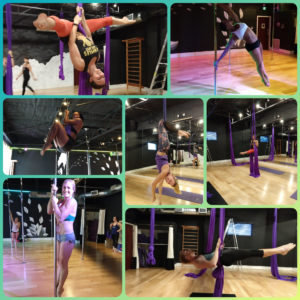
Whatever you are training, there’s a conditioning move for it!
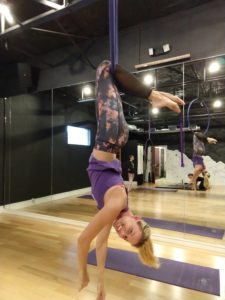
That dreaded hawk’s hang.
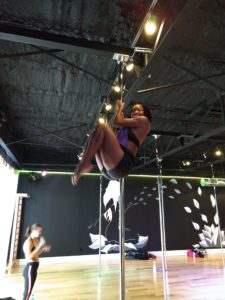
First step to a pole invert: pole crunches!
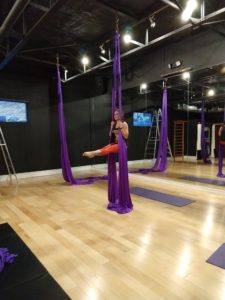
Pikes on silks work pretty much your whole body! (Arms, core, quads, lats, etc etc)
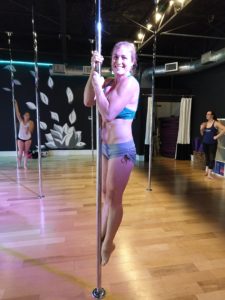
Pole pull-ups build upper body and core strength and help control body positioning!
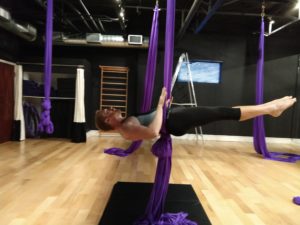
This silks pose is CORE CITY and also develops balance.
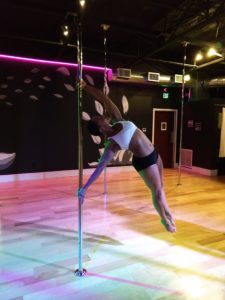
Want a handspring deadlift? You may need to do conditioning exercises like a hang to practice engaging properly!